
Scan four single zones before release
Divide the inner ring into four practical zones: straight/off side, straight/leg side, behind square/off side and behind square/leg side. Before every ball, identify the deepest fielder, the weakest pickup position and the player moving away from the likely ball path. Update after each field change. Do not stare at a gap and premeditate contact regardless of line. The scan narrows the options so the batter can respond faster after the ball is played. The greatest fast bowlers of all time reduce decision time, making pre-ball awareness more useful than a late search for a run.
Build low-risk scoring contact
Create singles through control. Useful options include a checked drive beside the bowler, soft hands into cover or point, a straight push, a leg-side deflection and a late dab when line permits. The goal is not always to dead-bat the ball; it is to send it far enough from the nearest fielder but not so hard that another fielder reaches it quickly. Keep head and base stable enough to start running. The greatest batsmen of all time found scoring areas without turning every good ball into a high-risk boundary attempt, but each player's safe repertoire must come from practice.
Agree who owns the call
Agree one calling system before the innings. A common rule gives the striker responsibility for a ball in front and the non-striker responsibility when it goes behind the striker, because that player can see it. Teams may use a different rule, but never leave ownership unclear. Calls should be early, loud and limited to agreed words such as yes, no and wait. 'Wait' means remain ready while the owner gathers information; it is not permission for both players to drift. Once a clear yes is accepted, both run unless a genuine emergency changes the play.
Win the first three steps
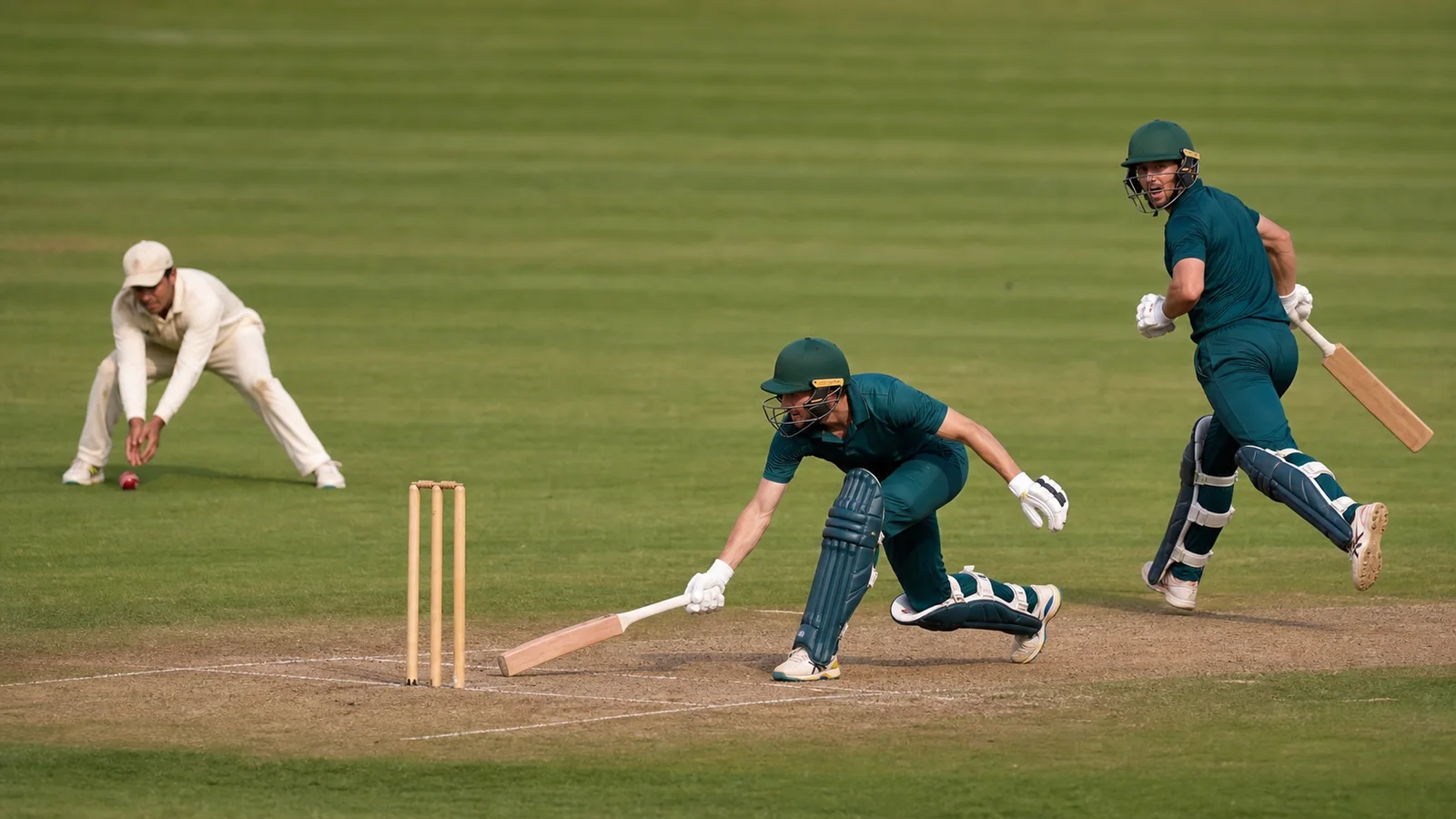
Win the first three steps from a balanced starting position. The non-striker backs up only within the Laws and only far enough to remain able to respond; the striker completes the shot without falling across the crease. A quick first step is more valuable than top speed after hesitation. Run in a straight lane that avoids collision and gives the bat a clear path to the crease. Watch the partner initially, then transfer awareness to the destination and caller. The best batting order for a cricket team can pair complementary roles, but even the ideal pair loses runs when their first movement disagrees.
Make ground and turn efficiently
Make good the ground rather than diving by habit. MCC Law 18 requires the batters to cross and make their ground; Law 30 defines when a batter is within ground. Slide or ground the bat just behind the popping crease, keep the body low enough to turn and avoid reaching so early that speed disappears. Turn on the side that creates the shortest safe change of direction for the next run, while protecting the bat from tangling with the partner. A head-first dive can slow recovery and add injury risk; use it only for an exceptional last effort, not routine technique.
Read the fielder, not just the gap
Read the fielder's action, not just distance. A close fielder moving away, wrong-footed or forced to use the weaker hand may offer more time than a deeper player charging directly toward the ball. Identify pickup side, balance, release speed, throwing arm, distance to the correct end and whether another fielder can relay. The caller should also know which batter is in greater danger. A throw to the bowler's end changes the margin from one aimed at the striker's end. Train this as a visual decision rather than memorising that every ball past point is a single.
Turn safe singles into twos
A possible two begins with a hard first run. As the first batter grounds the bat and turns, the partner with the clearer view reassesses the pickup, boundary distance and throw. Call the second early enough for commitment; do not wait until both batters are stationary. Run the first with a shape that allows a turn, not a wide arc. On large grounds, twos can raise scoring without boundary risk, but fatigue and a strong throwing arm change the margin. Stop when the fielder fields cleanly facing the stumps; a fumble is new information, not an automatic second.
Rotate strike against pace
Against pace, use the ball's speed without losing control. Soft hands can reduce an edge's carry, while a checked push or guided shot can send pace into a gap. Start only after reading whether the ball has passed an inner fielder; movement and bounce can turn an intended push into a catch or inside edge. The non-striker must expect late deflections and overthrows without crossing blindly. A hard new ball can reach fielders quickly, so the best use of the new ball in cricket affects batting margins too: what looks like an open single may close faster than it would with an older ball.
Rotate strike against spin
Against spin, begin with the field and bowler's release. Use depth in front of square, soft hands into the off side, controlled leg-side work, a sweep or late contact only when those strokes belong to the batter. Leaving the crease can change the field but also removes time for a call. Watch close catchers and the bowler, who may field straight pushes. The best spin-bowling field settings often try to close easy singles to one side; one safe response is enough to prevent dots, but forcing the blocked side can bring bat-pad, leading edge or run out into play.
Strike rotation in Test cricket
In Tests, rotation can prevent a bowler from repeating the ideal line to one batter and can settle a partnership, but it is not automatically worth a wicket chance. On a difficult surface or against a dominant spell, leaving well and defending can be the positive choice. Use singles that arise from controlled strokes and weak field positions. ESPN analysis has challenged the simple belief that changing strike always improves survival against elite bowlers, so treat the benefit as conditional. The best way to build a Test innings balances threat, partner role and scoreboard rather than chasing a rotation quota.
Strike rotation in ODI cricket
In ODIs, singles and twos connect boundary phases and keep the required rate from rising silently. Track dots, but also track which strokes created safe options and whether the field is being moved. Middle overs against spin often reward a reliable push, sweep or use of depth; the exact choice depends on the field and batter. In a chase, compare the current rate with the best strategy for chasing in cricket: a risky single is not justified merely because three dots occurred, and refusing every safe one transfers a larger problem to later overs.
Strike rotation in T20 cricket
In T20, a single can be valuable, neutral or costly depending on balls, boundary need and who faces next. Early in an over, changing strike may expose the better matchup; late in an innings, a boundary hitter may decline a marginal run to keep the next ball. Yet routine refusal of safe singles wastes runs and lets the bowler control the contest. Use a traffic light: green when contact, caller and fielder margin are clear; amber when one element is uncertain; red when the ball is near a balanced inner fielder or the partner cannot respond. Match urgency changes the threshold, not the facts.
When should a batter keep the strike?
Keeping strike at an over's end is a matchup decision. Consider the next bowler, partner's ability, required rate, wickets and whether one run is itself valuable. A specialist batting with the tail may seek boundaries or twos early and manage singles later, but rigid shielding can waste scoring and make the final ball predictable. A capable partner should not be treated as unable to face. The best batting partnerships of all time worked as pairs rather than one player owning every ball. Decide before the over which states justify retention, then update when the actual score changes.
A practical strike-rotation drill and checklist
Train rotation with a four-zone game. Place four inner-ring fielders, award one point for controlled contact into a called zone, another for an early correct call and another for making ground with a balanced turn; deduct for hesitation, unsafe start or short run. Add a second-run decision and change fields every six balls. Finish with the checklist: scan, choose, control, call, commit, ground, turn and reassess. The best way to rotate strike in cricket is not to steal every possible run. It is to recognise and complete the right run together, then be ready for the next ball.