
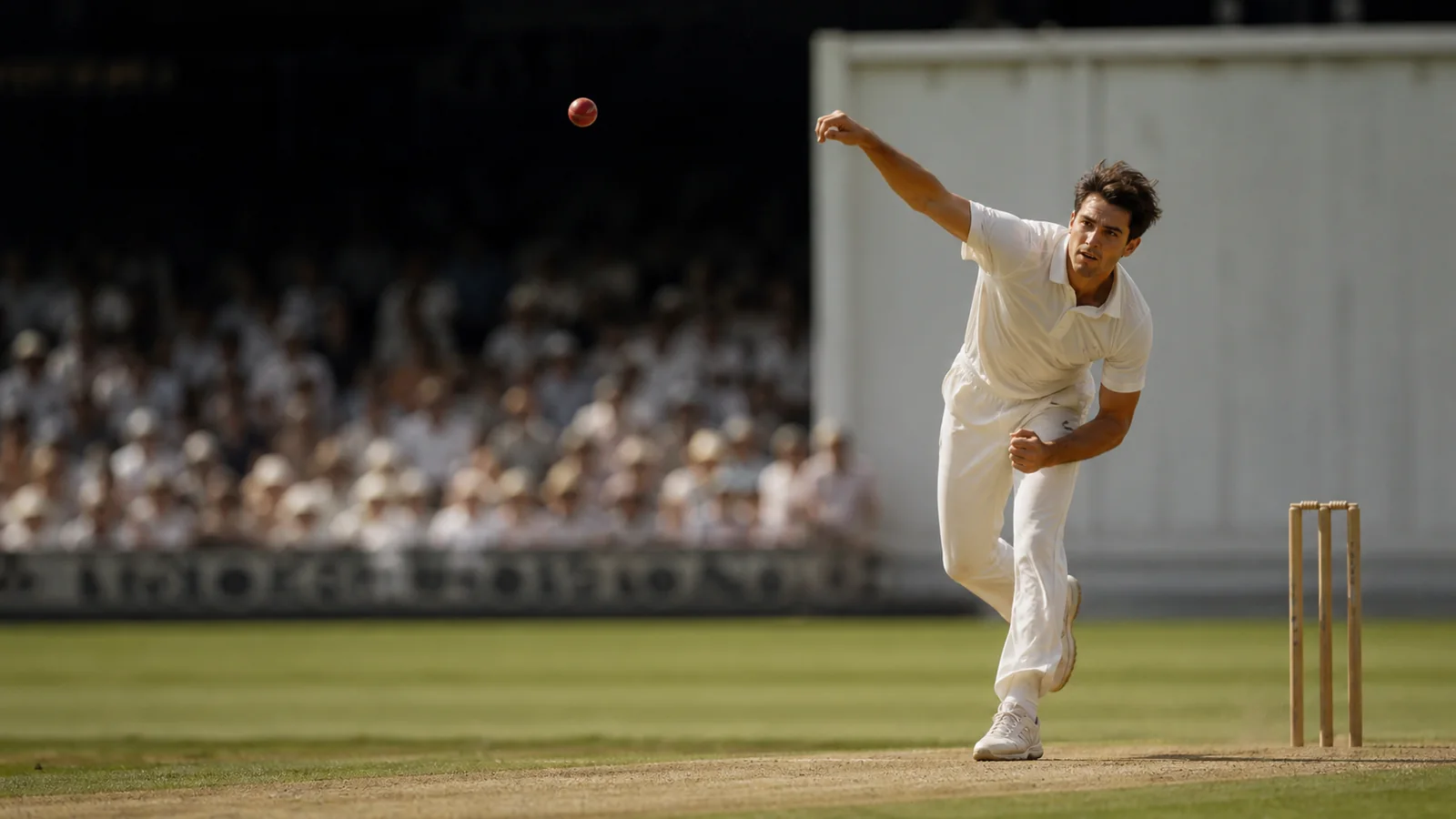
How this Test-only ranking works
The method starts with sustained wicket-taking quality. Career average measures cost, strike rate measures how often a bowler broke a partnership, and wickets show how long that quality lasted. Historical ICC peak ratings help identify a bowler's highest level. Conditions, new-ball and old-ball skill, attack burden and five-wicket frequency provide context. ODI and T20I records do not count. Batting and captaincy do not raise Imran Khan or Pat Cummins. Raw speed does not raise a bowler whose Test record falls short.
The top 10 at a glance
The order is Marshall, McGrath, Hadlee, Steyn, Ambrose, Imran, Bumrah, Rabada, Cummins and Garner. The first six have completed careers, while Bumrah, Rabada and Cummins remain active at the 21 August 2026 research cutoff. Their places use only work already completed. Garner takes the final position through exceptional efficiency across 58 Tests. Dennis Lillee, Allan Donald, Wasim Akram and James Anderson form the closest group outside the 10, each for a different reason.
10. Joel Garner
Joel Garner ranks tenth with 259 wickets from 58 Tests at 20.97. His height created steep bounce, but the number that matters here is how cheaply he removed batters across a substantial career. Garner shared wickets with Michael Holding, Andy Roberts, Colin Croft and Marshall, so he had fewer chances to build the totals reached by later lone leaders. The shorter span keeps him below the active trio. His average, control and ability to strike without leaking runs give him the last place ahead of bowlers with larger but less efficient records.
9. Pat Cummins
Pat Cummins is ninth. ESPNcricinfo's Test record showed 316 wickets at 22.21 with a strike rate of 46.0 at the cutoff, and the ICC reported his 300th wicket in the 2025 World Test Championship final. His historical ICC peak of 914 equals McGrath and exceeds Marshall's peak rating. Cummins can attack with pace and bounce, then hold a length for long spells. The active-career discount matters. He has already supplied an elite peak and enough volume for this list, but his final average, workload and late-career shape remain unknown.
8. Kagiso Rabada
Kagiso Rabada ranks eighth because no modern high-volume quick has taken wickets more frequently. At the cutoff he had 340 Test wickets at 22.03 and a 39.5 strike rate. The ICC recorded nine wickets in South Africa's 2025 World Test Championship final win and described his strike rate after that match as the best among bowlers with more than 150 wickets. Rabada's economy rate is higher than those of several bowlers above him, and his career continues. His combination of volume and attacking rate has already crossed the all-time threshold; career completion decides how much higher he can climb.
7. Jasprit Bumrah
Jasprit Bumrah is seventh. His 234 wickets at 19.79 and strike rate of 42.8 at the cutoff give him the strongest rate combination in this selected field. The ICC marked his 200th wicket in December 2024 and noted that no previous bowler had reached that volume while averaging below 20. Bumrah has succeeded with the new ball, reverse swing and seam movement across continents. He stays below six completed greats because 52 Tests cannot yet prove the same durability as 80, 100 or 120 Tests. The ranking credits his record and refuses to assume the rest of his career.
6. Imran Khan
Imran Khan ranks sixth as a bowler, with his batting and captaincy removed from the calculation. He took 362 Test wickets at about 22.8 and reached 922 in the historical ICC ratings, the highest post-war peak for a fast bowler in Wisden's summary. His career curve matters: after a developmental opening, he became a devastating old-ball and reverse-swing bowler who could carry Pakistan's attack. A lower career strike rate and less uniform early record keep him behind the top five. His peak, longevity and attack burden keep him above the active group.
5. Curtly Ambrose
Curtly Ambrose is fifth. He took 405 Test wickets at 20.99 and reached a historical ICC peak of 912. Ambrose paired a high release point with relentless accuracy, so batters faced bounce without receiving easy runs. His record survived the transition from West Indies' deepest pace years into a period when he and Courtney Walsh carried more responsibility. Marshall offered more variation, Steyn struck faster, Hadlee carried a larger share of his country's wickets and McGrath sustained elite output longer. Ambrose still owns one of the cleanest efficiency records in Test history.
4. Dale Steyn
Dale Steyn ranks fourth. The ICC records 439 wickets in 93 Tests at 22.95, 26 five-wicket innings and a 42.3 strike rate. At retirement, that strike rate was the best among bowlers with more than 200 Test wickets. Steyn created wickets through late outswing at high pace, then used reverse swing and a fuller length when surfaces offered little. He also spent 263 weeks at the top of the ICC Test bowling rankings. Injuries shortened his final phase, but the completed record combines an exceptional peak with enough longevity to sit above the active quicks.
3. Richard Hadlee
Richard Hadlee takes third. His 431 wickets in 86 Tests came at 22.29, with 36 five-wicket innings, and he became the first bowler to pass 400 Test wickets. New Zealand could not rotate him through a four-man pace battery like West Indies, so Hadlee often carried the primary wicket-taking burden and still preserved elite efficiency. He refined his run-up and control as his career developed, trading some early speed for movement and accuracy. Steyn has the faster strike rate; Hadlee's workload, five-wicket frequency and responsibility create the narrow separation.
2. Glenn McGrath
Glenn McGrath is second. He took 563 wickets in 124 Tests at 21.64 and reached a historical ICC peak of 914. McGrath's method looks simple on a scorecard: attack the top of off stump, use bounce and make the batter play. Repeating it across fourteen years, different continents and long series made it rare. He entered the ICC top five and never left it, according to Wisden's ratings review. Marshall produced a better average and faster strike rate in a tougher internal race for wickets. McGrath owns the strongest longevity case among the top group.
1. Malcolm Marshall
Malcolm Marshall ranks first because every major Test lens supports him. He took 376 wickets at 20.94, struck every 46.7 balls and stayed effective despite sharing an attack with other West Indies greats. At 5 feet 11 inches, he could not rely on extreme height; he used pace, late swing, cutters, angle and a sharp bouncer instead. He succeeded in different conditions and adjusted when injury or surface demanded another method. McGrath has more wickets and Hadlee carried more national responsibility. Marshall's blend of efficiency, strike power, adaptability and complete career makes the best overall case.
Why James Anderson and Wasim Akram miss the 10
James Anderson's 704 wickets set the fast-bowling volume record, but his 26.45 average and 56.9 strike rate leave a larger efficiency gap than the selected 10. Wasim Akram's 414 wickets, left-arm angle and reverse swing make him one of cricket's most skilled bowlers, yet his Test average of 23.62 and strike rate trail the strongest statistical cases here. Allan Donald's 330 wickets at 22.25 put him close to Garner and Cummins. Dennis Lillee's 355 wickets and influence remain formidable. Different weight on longevity, attack burden or technique can move any of these names into tenth.
How active bowlers could change the order
Active careers require a separate rule because a great start does not reveal the ending. Bumrah could rise if he preserves his sub-20 average while adding a larger workload. Rabada could move higher if his exceptional strike rate survives another phase of his career. Cummins can strengthen a top-five case by maintaining his average and peak value beyond 300 wickets. The same uncertainty works in the other direction. Injuries, workload management and late decline can change career rates, so this edition records the cutoff rather than projecting future numbers.
Test greatness is different from raw speed
Test greatness and measured speed answer different questions. A speed list rewards one delivery at maximum pace. This ranking rewards wickets taken repeatedly across days, series and conditions. StumpScope's fastest bowlers in cricket history page therefore starts with Shoaib Akhtar, while this Test list starts with Marshall. The broader greatest fast bowlers of all time guide can also use ODI and World Cup impact as a tiebreaker. Keeping those three intents separate prevents fame in one format from altering the evidence in another.
The final verdict
Marshall has the strongest complete Test record under this method, with McGrath's longevity and Hadlee's attack burden producing a close top three. Steyn and Ambrose complete the first tier. Bumrah, Rabada and Cummins have already built all-time evidence, but their final positions remain open while they play. No cross-era ranking can remove differences in schedules, pitches, balls and opposition. A useful list states those limits, shows the records behind each choice and changes only when new completed evidence earns the change.