
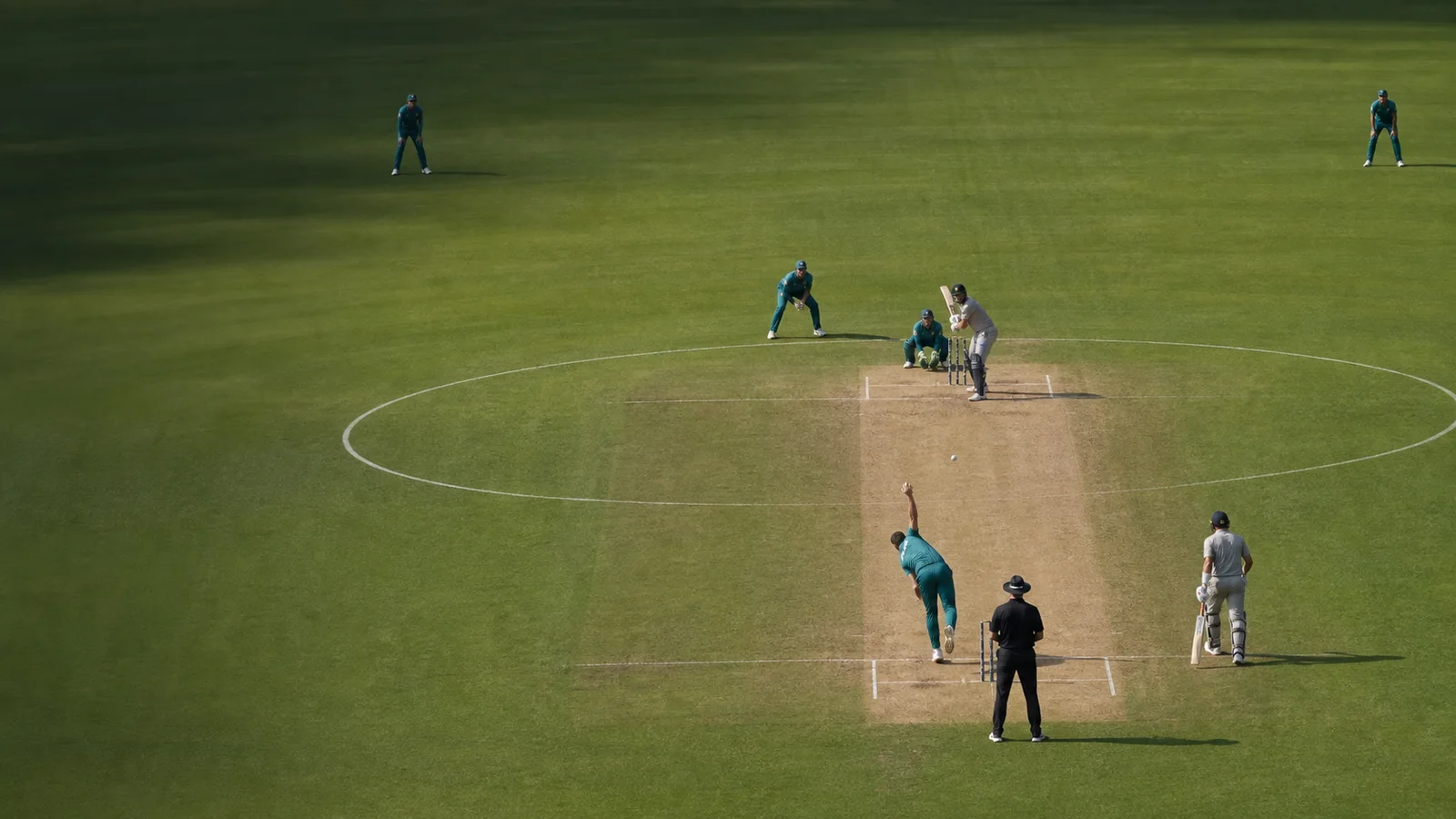
The short answer
T20 and ODI use the same two-outside concept in the referenced opening phases, but their standard duration differs. A 20-over men's T20I normally uses overs 1-6; a 50-over men's ODI uses overs 1-10. That matters because an ODI field may need to survive longer spells and two new balls, while a T20 captain has fewer overs to seek a wicket before the field opens. Competition and reduced-innings conditions can differ, so verify the current document rather than assuming every powerplay lasts six overs.
T20 and ODI powerplays are not identical
Count before delivery: bowler, wicketkeeper and nine other fielders. The two outside riders are part of those ten non-bowlers, not extra players. MCC and ICC placement rules also continue to apply, including on-side limits, pitch encroachment and movement. A useful verbal check is: ‘keeper, seven inside, two outside.’ Then name every position. If the list produces eleven non-bowlers or three outside fielders, the diagram is not merely tactically poor—it is illegal.
The legal and player-count check
For right-arm outswing to a right-hander, use wicketkeeper, slip, point, cover, mid-off, mid-on, midwicket and square leg inside, with third man and fine leg outside. That is ten non-bowlers and two deep. Slip pursues the outside edge; point and cover close drive gaps; third man protects the thicker edge; fine leg covers the glance. If the bowler is genuinely full and outside off, deep cover may replace fine leg, but the captain must accept greater risk from a ball on the pads.
A new-ball outswing field
For inswing to the same batter, try wicketkeeper, slip, point, cover, mid-off, mid-on, midwicket and square leg inside, with deep square leg and fine leg outside. Bowled and lbw remain the primary wickets, while the two riders protect the pick-up, clip and glance created by inward movement. Slip stays for late movement and imperfect control. Do not move both riders leg side if the bowler is missing wide; either correct the line or restore off-side protection.
An inswing powerplay field
A hard-length plan can use wicketkeeper, slip, backward point, cover, mid-off, mid-on, midwicket and square leg inside, with third man and deep square leg outside. Third man protects the upper edge and glide; deep square covers pull and top edge. Gully may replace cover or midwicket when bounce and carrying thick edges make it a better catcher. The greatest fast bowlers of all time made this field work through repeatable height; a sequence of half-volleys needs a different map.
A hard-length pace field
For right-arm leg-spin turning away from a right-hander, use wicketkeeper, slip, point, cover, extra cover, mid-off, mid-on and midwicket inside, with deep cover and long-on outside. Slip supports the outside edge; the off-side ring blocks easy width; deep cover protects the lofted drive; long-on covers the straighter release shot and variation. If the batter sweeps rather than drives, deep square may replace long-on. The best powerplay spinners in T20 cricket earn their field through control, not novelty alone.
A spin-away powerplay field
For right-arm off-spin turning into a right-hander, use wicketkeeper, slip, point, cover, mid-off, mid-on, midwicket and short fine leg inside, with deep midwicket and long-on outside. This protects the slog and straight loft while leaving the off side defended by the ring. If the spinner bowls wider outside off, replace one leg-side rider with deep cover. A best field setting for spin bowling always states turn direction, because the same position names cannot serve opposite stock balls without a new rationale.
A spin-into powerplay field
Keep slip while the ball swings or seams, the bowler is full enough to draw the edge, and chances carry. A slip can also save the uncontrolled edge that would otherwise beat the ring, so its value is not only a catch. Remove it when the batter leaves safely, the bowler goes short, edges die or the open scoring gap costs more than the chance. For a new batter, restore slip if the movement still exists. The decision should follow evidence, not the over number.
When should slip stay in?
Against a left-hander, rebuild rather than mirror. A right-arm bowler's angle and swing direction change the off-stump channel, while point, cover, midwicket and fine-leg arcs reverse. Slips move to the new off side, but wind and unequal boundary dimensions can keep the two riders asymmetric. Spin direction also changes. State the intended wicket, then choose the deep pair. A change from over to around the wicket requires another check because the batter's accessible zones shift again.
How the field changes for a left-hander
The two outside fielders should use the ground. If one square boundary is 10 metres longer, invite the batter to clear it with the less controlled shot, provided the bowler can hold the matching line. Wind can turn the longer side into the easier side, so distance alone is insufficient. Place the stronger catcher or faster ground fielder where more balls are expected, not simply in the larger zone. A boundary fielder is part of the bowling plan and must know the planned miss.
How boundary size changes the two riders
When a batter advances, decide whether the answer is length, pace, line, keeper position or field. Moving long-on straighter may help against a loft; bringing mid-off tighter may pressure the drive; a bouncer can use the batter's movement against them. Change one variable at a time where possible. If the bowler follows a moving batter with a leg-side full toss, shifting deep cover after the boundary does not solve the execution problem. The best bowling order in cricket also keeps an alternative method available.
What to change after a batter advances
Rain or delay can shorten the innings and change powerplay length. ODI playing conditions include a phase table; T20 conditions have their own reduced-over provisions. A revised phase can start immediately after an interruption. Take the legal information from umpires and the scoreboard, then rebuild the field for the overs remaining. Do not reuse a standard six- or ten-over assumption. The tactical goal stays the same, but fewer deliveries increase the value of every boundary and wicket.
Reduced innings and interruptions
Common mistakes include using three outside riders, forgetting the wicketkeeper when counting, and placing both deep fielders on historical strengths that the current bowler never feeds. Captains sometimes remove slip after one boundary, keep it while bowling short, or use a spin field without stating turn direction. Another error is letting the circle fielders stand on their heels, conceding effortless singles. Finally, a field that protects a wide yorker while the bowler attacks the stumps leaves its most likely ball unsupported.
Common powerplay field mistakes
Use an eight-point check: identify T20 or ODI; confirm the current powerplay overs; count keeper plus nine other fielders; name the planned ball; choose the two boundary risks; retain only credible catchers; assign every ring fielder a single-saving lane; and define the trigger for change. After each over, compare actual pitch locations, swing or turn, batter movement, boundary geometry and scoring zones. The best powerplay field setting is legal, active and connected—two deep riders, one clear bowling method and no position without a job. Recount the field whenever a batter or bowler changes.