
The short answer
For every field, finish three sentences before the bowler begins: the stock ball turns from here to here; the intended wicket is this; the safe scoring option offered to the batter is that. A right-arm off-spinner’s stock ball normally turns into a right-handed batter, bringing bowled, lbw, inside edge and leg-side bat-pad possibilities into the plan. A right-arm leg-spinner’s stock ball normally turns away, making the outside edge, stumping and mistimed off-side stroke more prominent. Googly, arm-ball and top-spinner variations add routes but should not make the base plan incoherent.
Start with turn and the intended wicket
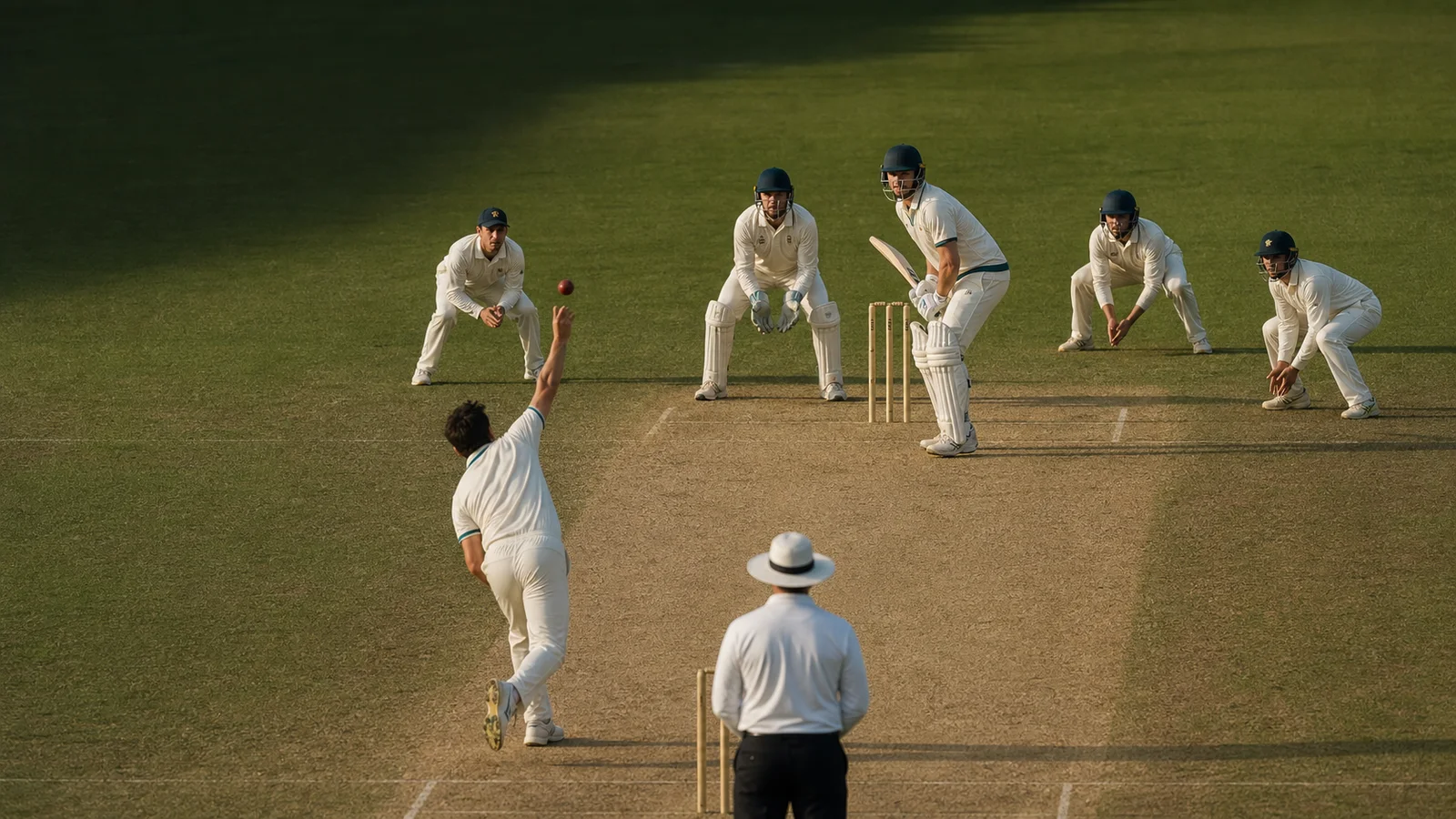
Slip covers an edge travelling behind the wicket on the off side. Short leg seeks bat-pad, glove or a checked leg-side contact. Silly point targets a defensive push or bat-pad chance on the off side. Leg slip and backward short leg cover finer leg-side errors. A catching cover or short midwicket can attack a drive or clip that stops in the surface. These names describe jobs, not compulsory ornaments. Place each catcher at a depth the chance can carry to, and use only fielders with the reactions, protective equipment and technique for that position.
What the close catchers actually cover
MCC Law 28 remains the legal base. At delivery, no more than two fielders other than the wicketkeeper may be behind the popping crease on the on side. Non-bowler fielders cannot encroach on the pitch before the ball touches, reaches or passes the striker, and pre-contact movement is limited. White-ball conditions add circle restrictions. Close catching also demands the competition’s safety rules, suitable protective equipment and competent players. Tactical ambition never overrides an umpire, a local playing condition or a fielder’s safety.
The legal and safety boundary
Against a right-hander in a Test, a right-arm off-spinner can begin with wicketkeeper, slip, short leg, silly point, point, cover, mid-off, mid-on, square leg and deep midwicket. That uses the wicketkeeper and all nine other fielders. Slip covers the outside edge from drift, an arm ball or imperfect defence; short leg attacks bat-pad; silly point attacks the checked off-side push. Point and cover close easy rotation, while mid-off and mid-on make the batter earn the straight single. If the ball is not turning or bouncing, remove the least plausible catcher rather than pretending attack still exists.
An attacking Test field for off-spin
A right-arm leg-spinner to a right-hander may start with wicketkeeper, slip, short leg, point, cover, extra cover, mid-off, mid-on, midwicket and square leg. Slip supports the stock leg-break’s outside edge. Short leg remains useful only when bounce, top-spin or googly creates a realistic leg-side chance. Cover and extra cover challenge the drive against turn, while midwicket protects the variation entering the batter. A silly point can replace a ring fielder on a sharply turning surface. The greatest spin bowlers of all time varied pace and trajectory, so their fields could not be reduced to one template.
An attacking Test field for leg-spin
Left-arm orthodox spin generally turns away from a right-hander, so its base geometry can resemble right-arm leg-spin without sharing every variation or release. Slip, point, cover and an optional close off-side catcher can support the outside-edge and drive plan. Left-arm wrist spin generally turns into the right-hander with the stock ball, shifting attention toward bowled, lbw, inside edge and leg-side control. Use the best left-arm orthodox spinners as evidence of varied methods, not permission to copy a famous field without its line, surface and batter.
How to field for left-arm spin
In T20 middle overs, start with the scoring shot the spinner is inviting. For off-spin into a right-hander, a controlled field may use point, cover and short fine leg inside, with long-on, deep midwicket, deep square leg, long-off and deep cover outside when the phase permits five. That map protects several common leg-side and lofted routes, but it is too defensive if the bowler is landing outside off and beating the edge. Bring in a catcher or tighten the ring when dot-ball pressure and turn make a wicket route credible.
A controlled T20 middle-over field
A powerplay gives fewer boundary riders, so the spinner must own a narrow plan. If bowling at the stumps with protection for the slog, choose the two deep fielders according to the longer boundary and batter’s dominant shot, then fill the circle to stop easy singles. The best powerplay spinners in T20 cricket succeed through control and matchup as well as surprise. At the death, spin is viable only with a repeatable ball and boundary map; long-on and long-off do not protect a sequence of drag-downs, full tosses and wide deliveries.
Powerplay and death-over spin fields
An ODI middle-over field can combine wicket pressure with strike control. Against a right-hander, an off-spinner may use slip or short midwicket as the attacking fielder, keep point, cover and short fine leg inside, and place long-on, deep midwicket, deep square leg and long-off outside under the standard middle-phase limit. The exact four boundary riders should follow the planned line. The best middle-overs spinners in ODI cricket do not merely concede slowly; the field and variations create a decision the batter must eventually get wrong.
An ODI middle-over field
The wicketkeeper is part of the dismissal plan, not a background position. Standing up can restrain the batter’s advance and create a stumping, but only when the keeper can collect the spinner’s pace, bounce and variation safely. A keeper standing back changes the available time for a stumping and may require another close fielder to cover deflections. The keeper also sees batter movement early and should communicate it. If the batter repeatedly leaves the crease before release, decide whether the response is flight, pace, line, keeper depth or field—not five unrelated changes.
How the wicketkeeper changes the field
Against a left-handed batter, rebuild the map. Right-arm off-spin now usually turns away; right-arm leg-spin usually turns in. The off side and leg side reverse, but boundary size, wind, bowling side and the batter’s sweep or reverse-sweep range prevent a perfect mirror. Move slip and close catchers to the new chance path, then reconsider point, cover, midwicket and fine-leg zones. Around-the-wicket angles can alter the lbw, bowled and edge routes again. Handedness is the first question, not the final answer.
What changes for a left-handed batter?
Take a close catcher out when the chance it covers has become less likely than the runs its vacancy concedes. Evidence includes no turn, low bounce, repeated edges dying short, a set batter reaching the pitch, or the spinner losing the intended length. Bring a catcher back for a new batter when the surface and control still support it. Change one variable at a time where possible. If the bowler drags three balls short, correct length before moving the entire field to the boundary and surrendering the original wicket plan.
When should a close catcher come out?
Common mistakes include surrounding the bat while bowling defensively, protecting both sides of the ground without controlling either, using short leg when no ball is reaching bat-pad height, and leaving slip in place after every edge has died. Captains also mirror an off-spin field for leg-spin without accounting for the googly, top-spinner or different release. In white-ball cricket, moving a boundary rider to the last shot can uncover the shot being deliberately invited. Finally, a close fielder without suitable skill or protection is a safety failure, not attacking captaincy.
Common spin-field mistakes
Use a six-point check. Name the stock ball and variation. State the direction of turn for this batter. Name the wicket route. Place only the close catchers that route supports. Protect the release strokes created by the same line while obeying the current phase limits. Finally, define the evidence that will change the field. Recheck bounce, turn, batter feet, boundary size, wind, keeper depth and fielder skill after each over. The best spin field is the one in which the spinner, keeper, captain and nine fielders understand the same trap—and can recognise when it has stopped working.