
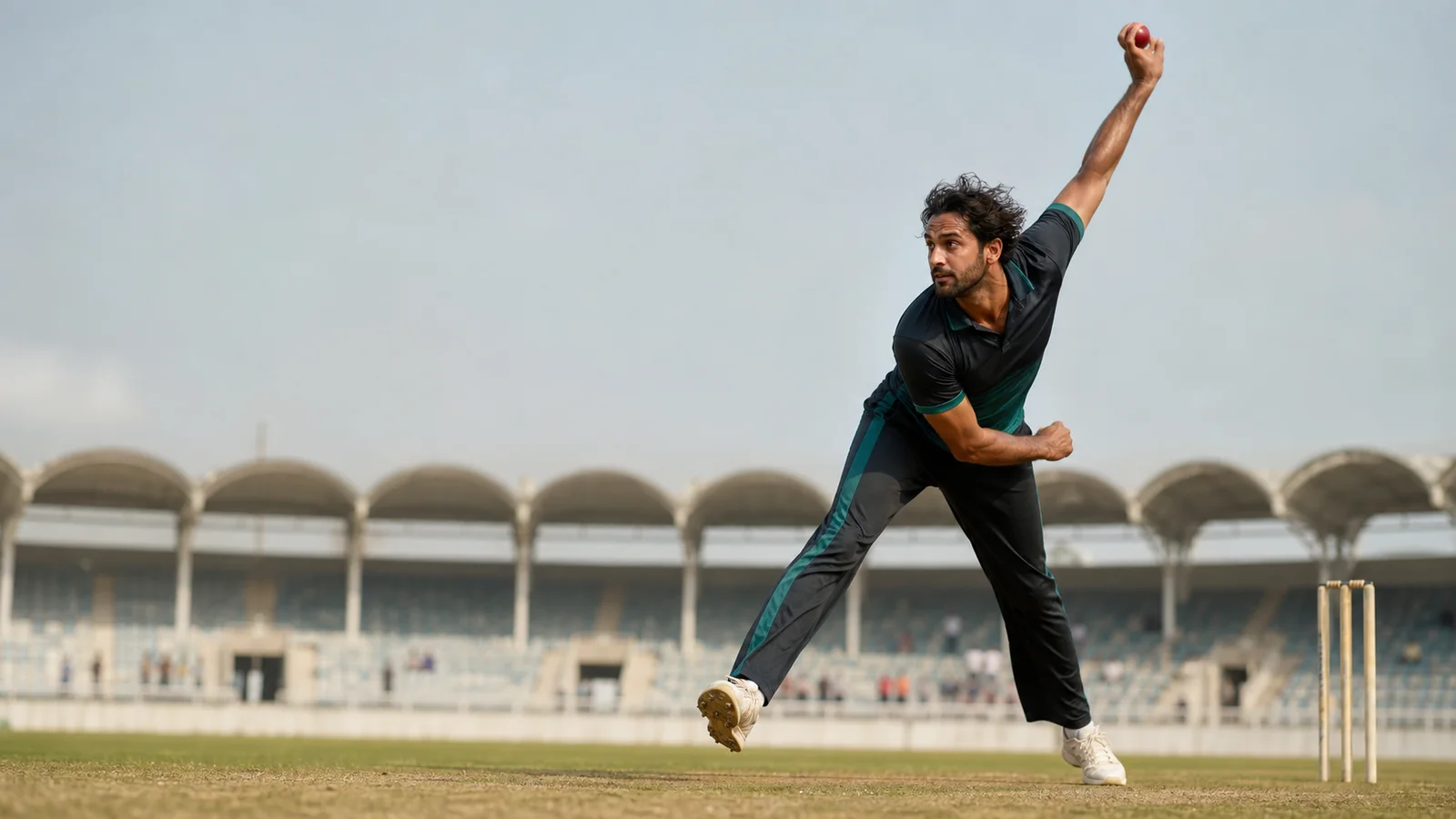
How this away-from-home ranking works
The method weighs away wickets, bowling average, strike rate, number of bowling innings, performance across different countries and defining spells. Away does not mean conditions were always hostile: a neutral venue may resemble home, and some touring teams carried attacks strong enough to share the burden. Conversely, a bowler can perform well while receiving little scoreboard support. The 100-wicket floor excludes several exceptional short records, including John Snow's 62 wickets and Mohammad Asif's 96. Active careers use the 22 August 2026 research cutoff and receive no projected totals. Era and workload are context, not automatic bonuses.
The top 10 at a glance
The order is McGrath, Bumrah, Hadlee, Marshall, Ambrose, Steyn, Walsh, Wasim, Imran and Holding. McGrath owns the best union of volume and average. Bumrah has the sharpest rate combination but a smaller active workload. Hadlee and Marshall pair elite averages with more than 200 wickets, while Ambrose is fractionally more efficient but struck less often. Steyn adds an unusually fast strike rate across difficult destinations. Walsh and Wasim supply vast touring volume, Imran combines peak and leadership burden, and Holding closes the ten with a fine average, strike rate and one of the defining away match performances in Test history.
10. Michael Holding
Michael Holding ranks tenth. He took 163 away wickets at 23.65, striking every 51.33 balls. His smooth approach and high pace travelled because they were supported by length and control, not speed alone. The clearest example came at The Oval in 1976, where Windies Cricket records 8 for 92 in England's first innings and 14 for 149 in the match. The surface was famously unhelpful to most bowlers, yet Holding sustained threat long enough to secure a series-leveling victory. Imran's larger workload and broader responsibility as attack leader create the narrow separation above him.
9. Imran Khan
Imran Khan is ninth with 199 away wickets at 25.76 across 83 bowling innings. The average is higher than those of the rate leaders, but his touring case contains both volume and decisive peaks. Yorkshire's historical account records 7 for 40 at Headingley in 1987, a spell that helped Pakistan win the Test by an innings and eventually secure their first series victory in England. Imran could take the new ball, return with reverse swing and carry tactical responsibility as captain. Wasim's 61 additional away wickets and slightly better average move the left-armer one place higher in this particular comparison.
8. Wasim Akram
Wasim Akram ranks eighth. He took 260 away wickets at 24.45 across 111 bowling innings, a touring workload exceeded here only by Walsh and McGrath. The ICC describes him as a master of swing and seam; the crucial away skill was that he could change the route to a wicket without changing his threat. New-ball movement worked in cloud or humidity, reverse swing helped on abrasive surfaces, and the left-arm angle created problems even when conventional movement faded. His strike rate is not as severe as Steyn's or Bumrah's, but few fast bowlers combined this volume, variety and efficiency outside home conditions.
7. Courtney Walsh
Courtney Walsh ranks seventh and leads the selected ten for away volume with 290 wickets at 25.03. That total was built through long spells and changing roles, from attacking partner to senior controller. In New Zealand in 1994–95, Windies Cricket's first-party series record shows his 7 for 37 in Wellington helped turn a low-scoring Test and complete a series win. His height produced bounce, but away success also required a disciplined length when pitches were slower than the Caribbean surfaces associated with his early career. Steyn's much faster wicket rate and more explosive peak push Walsh to seventh despite the extraordinary workload.
6. Dale Steyn
Dale Steyn ranks sixth with 178 away wickets at 24.91 and a strike rate of 45.57. His average is less imposing than Ambrose's or Marshall's, yet wickets arrived faster than for every retired bowler above him except none in this selected group. The ICC's account of Melbourne in 2008 records five wickets in each innings as South Africa secured their first series victory in Australia; he also made 76 in a decisive lower-order partnership. In India at Nagpur in 2010, 7 for 51 through reverse swing showed another route to impact. Ambrose's lower average and 200-wicket workload narrowly win the next place.
5. Curtly Ambrose
Curtly Ambrose ranks fifth. His 202 away wickets cost 20.79 each, the best average among the retired 200-wicket qualifiers in this list. He was not merely a beneficiary of Caribbean bounce: his steep release, accuracy and patience created uncertainty on faster, slower and more worn surfaces. At Perth in 1993, Windies Cricket recounts 7 for 25, including a sequence of seven wickets for one run, as Australia collapsed on the opening day. Marshall struck more frequently and collected 17 additional away wickets, which gives him fourth. Ambrose's case remains one of the clearest demonstrations that control can make extreme height portable.
4. Malcolm Marshall
Malcolm Marshall ranks fourth with 219 away wickets at 21.58 and a 49.83 strike rate across 93 bowling innings. Windies Cricket records 35 wickets at 12.65 in the 1988 series in England, including 7 for 22 at Old Trafford and 10 for 92 in the match. That tour captured the full range: pace, late movement, a skidding bouncer and tactical intelligence from a bowler who was not unusually tall. Hadlee's 11 extra away wickets, fractionally better rate profile and singular Brisbane performance edge the comparison. Marshall remains ahead of Ambrose because his wickets came faster while preserving an elite average.
3. Richard Hadlee
Richard Hadlee ranks third. He took 230 away wickets at 21.73 and struck every 48.93 balls, often carrying a far larger share of New Zealand's attack than the West Indies greats around him. New Zealand Cricket records 9 for 52 and 15 for 123 at Brisbane in 1985, the foundation of New Zealand's first Test victory in Australia. Hadlee's method travelled because accuracy, seam position and subtle movement did not depend on one kind of pitch. Bumrah's superior average and strike rate at the current cutoff are too substantial to ignore, but Hadlee's completed workload keeps the second-place decision close.
2. Jasprit Bumrah
Jasprit Bumrah ranks second at the research cutoff. He had 172 away wickets at 20.54 and a strike rate of 44.62, the best rate combination in the selected ten. The ICC report from Melbourne in 2018 records nine wickets in the match as India took a 2–1 series lead in Australia. His unusual release is only part of the explanation: he can change length quickly, move the new ball, reverse the old one and attack the stumps without losing control. McGrath remains first because 274 away wickets provide a substantially larger completed sample. This ranking will not award Bumrah matches he has not yet played.
1. Glenn McGrath
Glenn McGrath ranks first. His 274 away wickets cost 20.81 and arrived every 48.97 balls across 112 bowling innings. Only Walsh took more away wickets among the selected ten, and no other bowler with McGrath's volume stayed so close to a 20 average. Cricket Australia records his 8 for 38 at Lord's in 1997, when England were bowled out for 77 after McGrath used the slope, a disciplined channel and conditions without chasing extra pace. His strength was repeatability: the same control could expose uncertainty in England, the Caribbean, South Africa or Asia. Volume, efficiency and geographic range make the strongest complete case.
The strongest omissions
John Snow, Mohammad Asif, Kagiso Rabada, Mitchell Starc, Pat Cummins and James Anderson are the strongest omissions. Snow's 62 wickets and Asif's 96 are below the workload floor despite excellent rates. Rabada had 142 away wickets at 24.77 and a 45.68 strike rate at the cutoff, close enough to enter a more peak-focused order. Starc's 167 wickets and Cummins's 132 keep both active Australians in the discussion. Anderson's 266 away wickets are immense, but his 29.83 average is materially higher than every selected bowler. No omission is evidence of failure; it reflects this method's balance of efficiency, volume and match impact.
Why away records need context
Away records need more care than a single split suggests. An Australian in England, a Pakistani in the UAE and a touring bowler at a neutral final may all be classified away while facing very different practical challenges. Era changes matter too: uncovered or partially covered surfaces, travel schedules, protective equipment, ball regulations and team strength alter the task. Strong attacks can reduce individual workload but also create pressure at the other end. Weak batting support can deny rest or defendable totals. The figures therefore answer where wickets were taken and at what cost; the ranking still has to explain how those wickets were created.
The final verdict
McGrath leads because no other qualifier matches his combination of 274 away wickets and a 20.81 average. Bumrah owns the strongest active rate profile, while Hadlee and Marshall provide the closest completed-career alternatives. Ambrose, Steyn and Walsh represent different balances of control, strike rate and durability; Wasim, Imran and Holding complete a top ten built for changing conditions. The greatest fast bowlers of all time guide considers complete careers, the best fast-bowling pairs of all time guide measures same-XI partnerships, and the best fast bowlers in Asian conditions guide isolates one demanding region. This away list is deliberately narrower: it judges what happened when a fast bowler left home, with the boundary and cutoff visible.