
The short answer
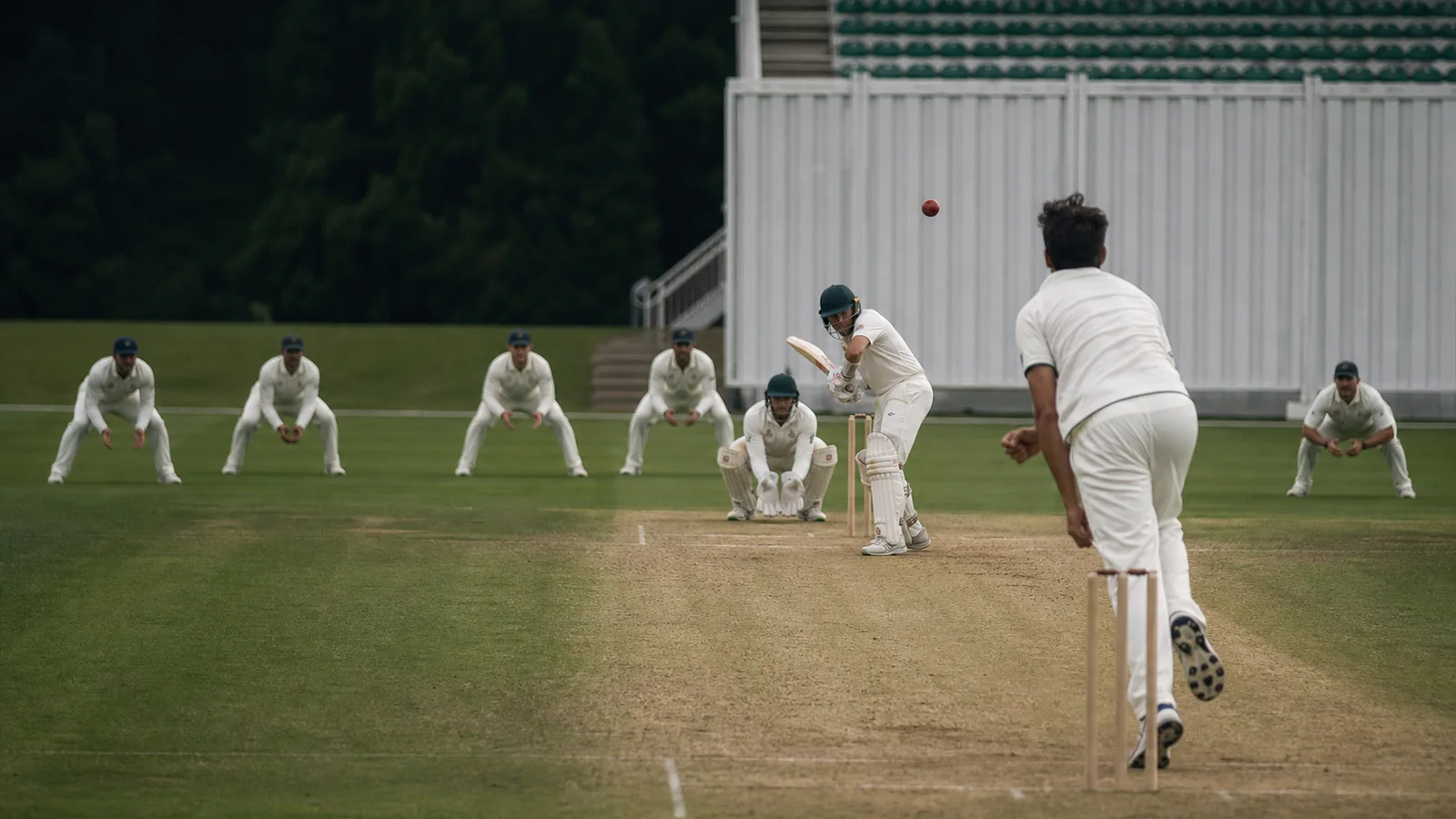
Attack means spending fielders on dismissals the bowler can realistically produce. A fourth slip is attacking when edges carry through that channel; it is decorative when the bowler is short, wide or getting no movement. A short leg attacks only when bounce, inward movement or spin creates glove and bat-pad chances. A boundary rider can support attack if it permits a fuller line or a sustained short-ball plan. Judge each position by its job, not its distance from the batter.
What does attacking actually mean?
The fielding side has a bowler, a wicketkeeper and nine other fielders. MCC Law 28 also limits placement: at delivery, no more than two fielders other than the wicketkeeper may be behind the popping crease on the on side. Non-bowler fielders cannot encroach on the pitch before the ball touches, reaches or passes the striker, and pre-contact movement is restricted. Standard Tests do not use ODI or T20 powerplay-circle phases, but the Laws and the current match playing conditions still govern every attacking plan.
The legal boundary and the player count
For right-arm outswing to a right-hander, the three-slip-and-gully field gives four catchers to the principal error path. First slip covers the finer edge, later slips spread wider, and gully covers the thicker or more square contact. Point and cover make the batter work for square and front-foot drives; mid-off supports the full off-stump line; mid-on covers the straight error; fine leg protects the glance. The best field setting for fast bowling still needs spacing adjusted to actual pace, bounce and where recent edges have carried.
A new-ball outswing field
Four slips plus gully make sense when a new or second new ball is swinging, the bowler is full enough to draw a stroke, edges are carrying, and the batter has limited scoring pressure on the fielding side. A complete version can use wicketkeeper, four slips, gully, point, short leg, mid-off and mid-on. That is all ten non-bowlers. Short leg is justified only by bounce or an inward option; otherwise it can become cover or fine leg. Remove a catcher when evidence changes, not merely because this shape looks unusually aggressive.
When four slips and gully make sense
An inswing plan needs a different map. Against a right-hander, wicketkeeper, two slips, gully, short midwicket, square leg, fine leg, cover, mid-off and mid-on accounts for all ten non-bowlers. Bowled and lbw are central, while short midwicket and square leg address the checked clip and inside contact. Slips remain because late movement, seam and imperfect control can still find the outside edge. A leg slip can replace another leg-side fielder only while Law 28’s behind-square on-side limit remains satisfied.
An attacking inswing field
For hard length and seam, the intended mistake may be a splice, glove, thick edge or hurried back-foot stroke. A practical field uses wicketkeeper, two slips, gully, backward point, cover, mid-off, mid-on, square leg and fine leg. On a fast surface, gully or short leg may gain value; on a slow surface, a catching cover or short extra cover may receive more miscues than a deep cordon. The greatest fast bowlers of all time used different lengths and angles, so reputation cannot choose the field for the current spell.
A hard-length and seam field
For off-spin to a right-hander on a turning Test pitch, try wicketkeeper, slip, short leg, silly point, point, cover, mid-off, mid-on, square leg and deep midwicket. Slip covers drift, the arm ball and imperfect defence; short leg attacks bat-pad; silly point attacks the checked push. The boundary fielder can sustain a fuller attacking line against the sweep or slog. Leg-spin and left-arm spin require their own geometry. The best field setting for spin bowling begins with turn direction rather than copying these names.
An attacking Test spin field
The older ball does not automatically end attack. Reverse swing can shift the wicket plan toward bowled, lbw, inside edge and short midwicket. A worn surface can bring spin and close catchers forward. Cross-seam bowling can make gully, backward point or short leg more relevant if bounce becomes uneven. If nothing is happening, pressure through a tight ring may create the next attacking opportunity by denying singles. The best bowling order in cricket should retain a bowler able to exploit the older ball rather than leaving field changes without the required skill.
How to attack with the older ball
Against a left-hander, rebuild the map instead of mirroring it mechanically. A right-arm seamer’s angle, natural swing direction and use of over or around the wicket change the edge and lbw routes. Slips and gully move to the new off side, but square boundaries, wind and the batter’s scoring strengths can keep the rest asymmetric. For spin, the stock ball may now turn in rather than away, or away rather than in. State the new wicket route before moving ten players at once.
How the field changes for a left-hander
Take a catcher out when its expected chance has fallen below the scoring cost created elsewhere. Signals include swing disappearing, edges repeatedly dying short, a set batter leaving safely, the bowler losing the full length, or a partnership scoring freely through one open zone. First distinguish field failure from execution failure. If a planned outswinger becomes a half-volley on leg stump, moving third slip does not solve the delivery. Correct the ball, then reassess the catcher after a meaningful sample.
When should a catcher come out?
Restore a catcher for a new batter when the ball and bowler still support the chance. A set batter may have forced cover protection, but a new arrival facing a moving ball has not earned the same field. The second new ball, a fresh spell, a change of ends or new cloud cover can also restore edge probability. Bring a catcher back with a clear instruction: fuller at off stump, hard length at the shoulder, or spin above the eyes. Without that connection, the fielder is hope rather than a plan.
When should a catcher return?
Score, wickets and time set the price of attack. With a large lead and limited time, conceding boundaries may be acceptable if extra catchers raise dismissal chances. In a close fourth-innings defence, giving away an easy release shot may be too expensive even with time available. Against the final recognised batter, attacking that player may matter more than attacking the tailender. Do not label every ring fielder defensive or every slip attacking; the match objective determines the value of each trade-off.
How score and time change the risk
Common mistakes include counting eleven support players as well as the bowler, stacking slips while bowling too short to find them, using short leg without bounce, and leaving gully after every edge has fallen in front. Captains sometimes remove all catchers after two boundaries or keep them through a long, unthreatening spell to appear positive. Another error is protecting the previous bad ball rather than the intended next ball. Finally, placing an unsuitable fielder in a high-skill catching position weakens even a sound tactical map.
Common attacking-field mistakes
Use a seven-point check before each spell: name the batter and handedness; state the bowler’s method; identify the intended wicket; count the wicketkeeper and all nine other fielders; confirm Law 28; name the scoring risk deliberately left open; and define the evidence that will change the field. Recheck movement, edge carry, bounce, ball age, batter control, score and time after each over. The best attacking Test field is the one that keeps asking a credible wicket question—and changes as soon as the evidence says the question is no longer relevant.