
The short answer
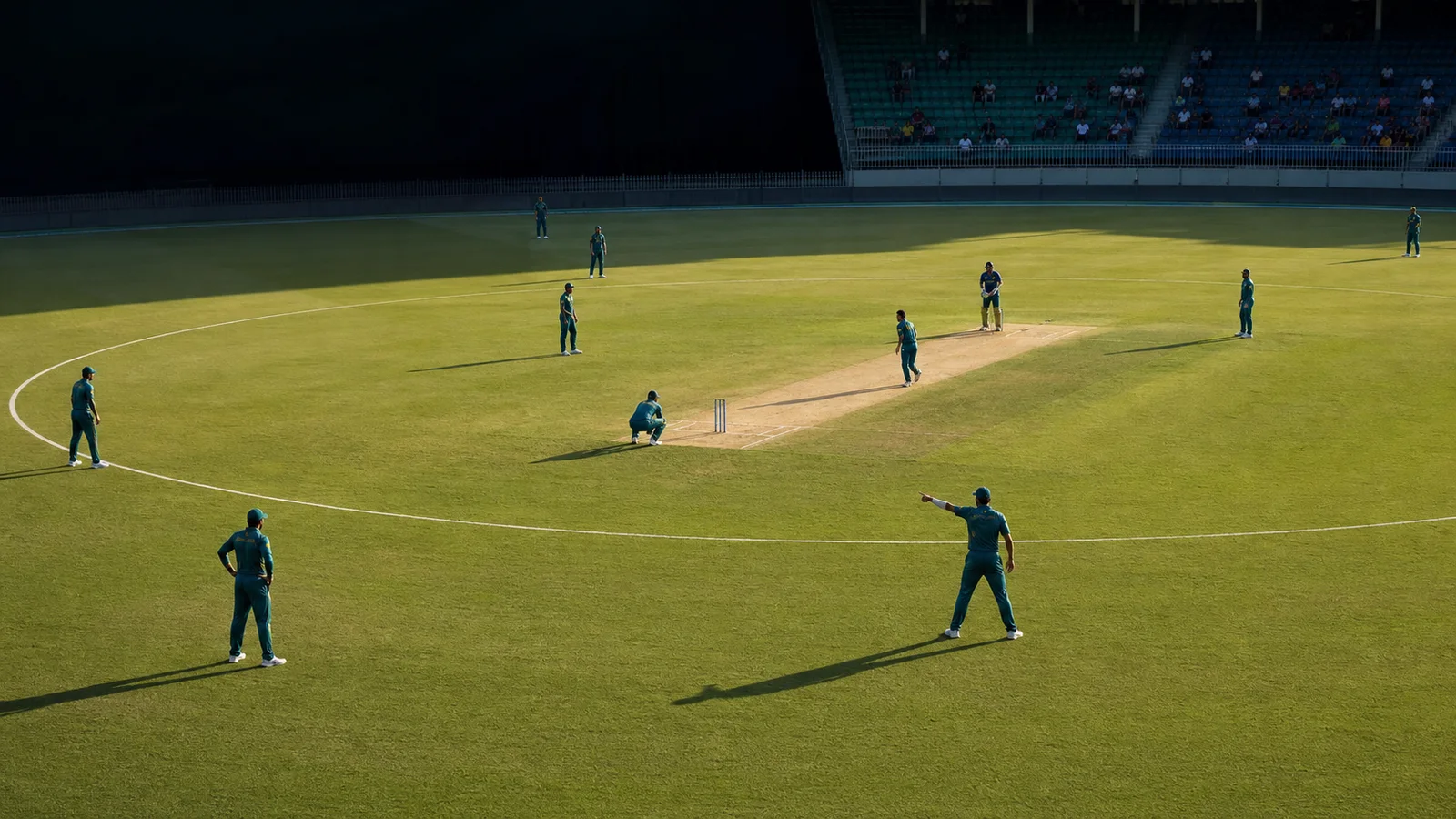
Defensive does not mean surrendering wickets or offering a single every ball. A useful field makes the batter hit away from a preferred zone, against the turn, into the longer boundary or over a well-placed rider. One slip can be defensive if it prevents an uncontrolled edge from racing for four and keeps the bowler on an attacking line. Five boundary riders can be wasteful if none protects the ball being bowled. Every fielder needs a named scoring shot, catch or single to stop.
Defensive does not mean passive
Under the referenced ICC men's ODI condition for a standard 50-over innings, no more than two fielders may be outside the marked restriction area in overs 1-10, four in overs 11-40 and five in overs 41-50. Reduced innings use the condition's adjusted phase table. The clause also contains leg-side restrictions, while MCC Law 28 supplies the general placement and movement boundary. Check the current competition document: a tactically sound field can still concede a no-ball if it is illegally placed.
The ODI fielding restrictions
For right-arm pace to a right-hander in the powerplay, try wicketkeeper, slip, point, cover, mid-off, mid-on, midwicket and square leg inside, with third man and fine leg outside. That accounts for the wicketkeeper and all nine other fielders while using only two deep positions. The map supports a controlled off-stump line and protects edges and glances. If the batter drives strongly but rarely edges, deep cover can replace third man—but the bowler must then avoid offering width behind point.
A defensive ODI powerplay field
New-ball defence begins with swing direction. For outswing, retaining slip and a tight cover-point ring can create dots without abandoning the edge. For inswing, midwicket, square leg and fine leg matter more, while mid-off and mid-on close the straight single. Do not move both deep fielders to the batter's strongest historical zones if the current bowler never feeds them. The greatest fast bowlers of all time made boundary protection credible by repeating the ball their field expected.
How to defend with the new ball
In overs 11-40, a pace-control field against a right-hander can place deep third, deep square leg, deep midwicket and long-off outside. Inside are wicketkeeper, point, cover, mid-off, mid-on and short fine leg. That is ten non-bowlers and four outside. The bowler can use hard length into the pitch or controlled cutters, but long-off is wasted if every ball is short and leg side. Swap riders according to the plan, not after every isolated boundary.
A middle-over pace field
For off-spin into a right-hander in the middle overs, use long-on, deep midwicket, deep square leg and long-off outside, with wicketkeeper, point, cover, mid-off, mid-on and short fine leg inside. This protects several lofted and sweep routes while making the cover or straight single contestable. If the spinner bowls wider outside off, replace a leg-side rider with deep cover or deep point. The best middle-overs spinners in ODI cricket connect turn, pace and boundary shape rather than relying on a generic 4-5 field.
A middle-over spin field
For a wide-yorker plan in overs 41-50, deep third, deep point, deep cover, long-off and long-on can be the five outside fielders. Inside, wicketkeeper, point, cover, midwicket and short fine leg complete the ten non-bowlers. Long-on is the adjustable rider: against a strong leg-side hitter or a bowler prone to missing straight, deep midwicket may offer more value. The off-side wall works only while the bowler lands the wide yorker; a full toss on leg stump defeats the design.
A death-over wide-yorker field
A straight-yorker or slower-ball plan needs a different boundary map. Long-on, long-off, deep midwicket, deep square leg and deep cover can protect straight lofts, slog arcs and a pace-off mishit, while point, cover, short fine leg and midwicket join the wicketkeeper inside. For hard length, deep third or fine leg may replace a straight rider. The best ODI bowling spells include execution under pressure; the field cannot turn an undefined mixture of misses into a coherent defence.
A straight-yorker and slower-ball field
Against a left-hander, reverse off and leg side but do not mirror blindly. A right-arm over-the-wicket angle changes the wide-yorker channel, straight boundary access and pick-up stroke. Boundary dimensions and wind may make one nominally weaker side easier to clear. Move deep point, cover, midwicket and square-leg riders after stating which ball will follow. If the bowler changes around the wicket, reassess again because the batter's scoring arc and lbw line move with the angle.
How handedness changes the map
Required rate decides whether the field should protect fours, deny twos or attack singles. When the batting side needs eight an over with many overs left, boundary protection plus a sharp ring can force escalation. If the required rate falls near the current scoring rate, conceding one every ball may be losing defence; bring a fielder in or create a catcher. When it climbs sharply, make the batter clear the longest boundary and guard the bowler's miss. Scoreboard pressure is useful only when the field does not release it.
How required rate changes defence
Bring a boundary rider inside when its zone is not being attacked, the bowler is controlling that shot, a new batter offers a catch, or easy singles are reducing the required rate. A short extra cover, short midwicket or slip can create a wicket without changing the primary line. Send the fielder back if the batter proves the boundary route repeatedly or execution deteriorates. Change one variable where possible so the captain can tell whether the new position or the new delivery caused the result.
When should a boundary rider come in?
An interrupted or shortened ODI does not keep the original 10-30-10 phase split. The playing conditions provide a table that recalculates the three phases, and a new restriction can take effect immediately after an interruption. Captains should get the revised phase information from the officials and scoreboard rather than estimating it. The field must be legal at the instant of delivery. The tactical principle remains the same, but the number of outside options and the time left to use them changes.
Reduced innings and interruptions
Common mistakes include placing five fielders deep while the current phase permits only four, counting the bowler as an additional support fielder, and protecting both sides so evenly that every single is free. Captains often chase the previous boundary, leave a rider where no planned ball can reach it, or use a wide-yorker field with no wide-yorker control. Another mistake is treating a new batter like a set hitter. Finally, saving runs at the rope is not enough if slow returns and poor backing-up turn ones into twos.
Common defensive-field mistakes
Use a seven-step check before every over: confirm the phase and outside limit; count wicketkeeper plus nine other fielders; name the delivery; mark the two most likely boundary shots; assign the inner ring's single-saving jobs; identify the higher-risk option deliberately left open; and define the trigger for change. Compare actual pitch locations, scoring zones, required rate, batter handedness, boundary size and fielder skill after the over. The best defensive ODI field is active, legal and specific—it makes the planned ball hard to score from instead of hoping the boundary is large enough.